
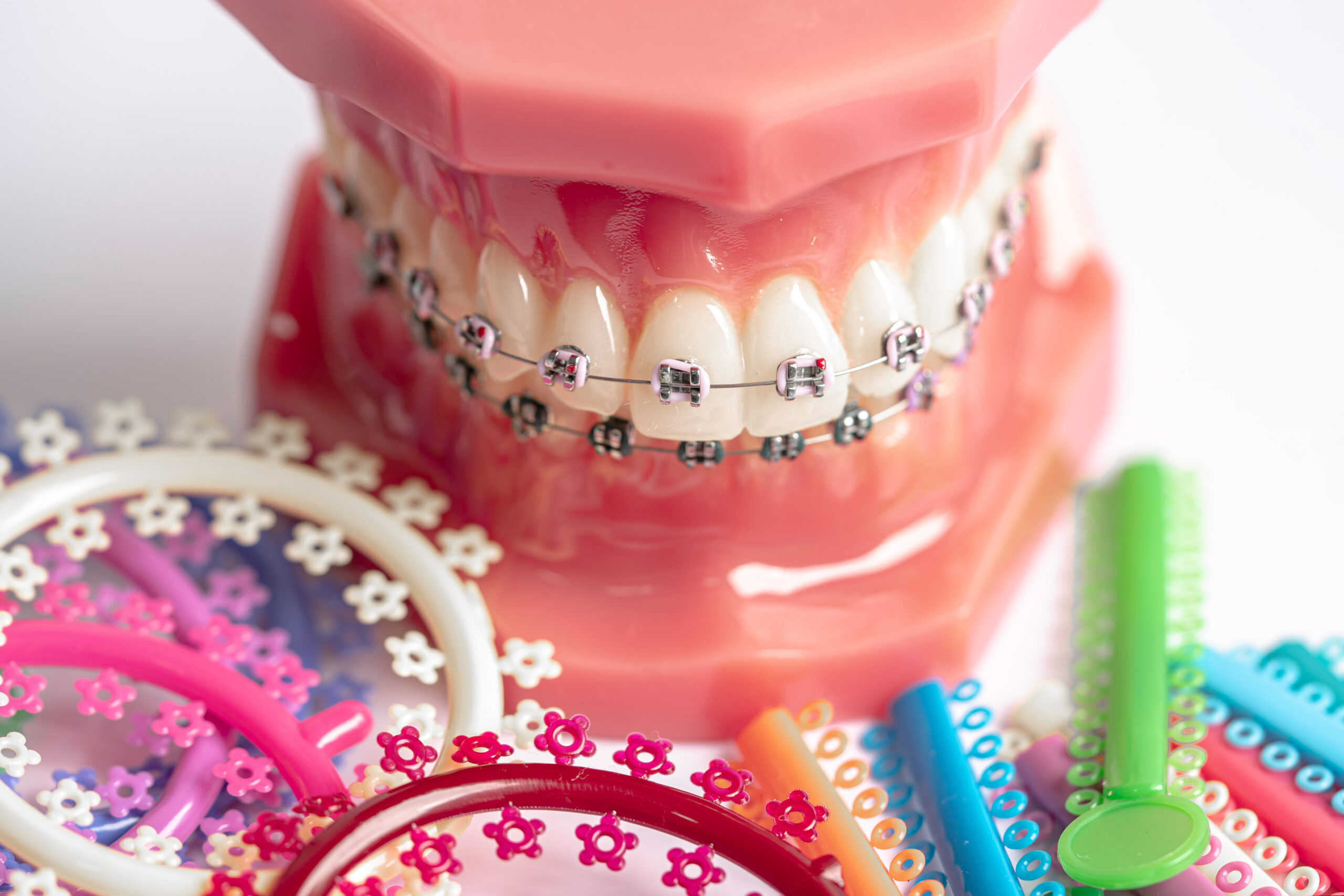
If you’re in pursuit of your dream smile, you’ve probably heard about metal and ceramic braces – but how do they compare, and which should you choose for your teeth?
Both metal and ceramic braces are tried-and-tested solutions for straightening bites, and though your orthodontist may recommend one of the other, the answer will often come down to aesthetics. While slightly pricier, some patients (particularly older braces-wearers) prefer the more subtle look of ceramic braces.
As experienced orthodontists in Sydney, we know that both options come with their own list of pros and cons. Whether you’re worried about how your braces will look, orthodontic treatment costs and timeframes, and how upkeep might fit into your busy schedule, there’s a lot to consider.
In this guide, we’ll explain the key differences between metal and ceramic braces for kids and adults, and what to expect from each, so you can make a confident – and informed – decision for your bite.
What are metal braces?
When you think of braces, chances are that you imagine the traditional metal bracket variety, and it’s for a good reason. Stainless steel metal braces remain the most common, most effective orthodontic treatment for people of all ages, used by orthodontists to manage a wide range of concerns related to crowding and spacing. Over an average period of around 18–24 months, metal braces will bring your teeth into alignment, straightening their structure to bring you a “normal” bite.
Metal braces use a combination of brackets, wires, and elastic bands to apply gentle pressure that guide your teeth into place. Those brackets are typically adhered to the front of your teeth, with an archwire connecting them. Your orthodontist may upgrade your archwire during scheduled tightening sessions, usually every 6–8 weeks.
While earlier metal brace designs were bulky – and a subject of dread for many – modern metal braces are smaller, smoother, and more comfortable for wearers. Despite this aesthetic evolution, metal braces remain strong, reliable, and capable of treating even the most complex alignment issues.

What are ceramic braces?
Ceramic braces function the same as traditional metal braces, except they’re made from a tooth-coloured porcelain material designed to blend in with your teeth throughout your treatment. They’re also often referred to as porcelain braces, or clear braces.
Like metal braces, ceramic braces work by using gentle, continuous pressure to shift your teeth into a straight alignment. Ceramic brackets are glued to the front of your teeth, and connected by an archwire (either silver or white).
Some orthodontists, like Ortho Co., use a self-ligating system designed to reduce friction, offer a more discreet look, and support tooth movement. Self-ligating ceramic braces (DAMON Clear) eliminate the need for elastic bands by using built-in, spring-loaded clips to hold the archwire in place.
Ceramic braces are especially popular among adults and teenagers seeking a more discreet approach to their orthodontic treatment. They do, however, come at a slightly higher cost than their metal brace counterparts.

Ceramic braces vs metal braces: Key differences
While metal braces and ceramic braces are functionally identical, there are a few key differences between them.
When choosing the right braces for your smile, it can help to know the pros and cons of every option in front of you. Let’s take a look at some of the key differences patients look at when considering braces:
| Feature | Ceramic Braces | Metal Braces |
| Material | Tooth‑coloured or clear ceramic brackets that blend with teeth | Stainless steel brackets – classic metallic look |
| Appearance | Less noticeable – discreet for teens/adults who want subtle braces | Very noticeable – traditional steel look |
| Durability | More fragile and prone to chipping or breaking | Very strong and durable – handles force well |
| Treatment time | Can be slightly longer if brackets break or need frequent replacements | Often a bit quicker due to stronger material and fewer breaks |
| Staining risk | Elastic ties around brackets may stain (coffee, tea, coloured foods). This is avoided in self-ligating Damon Clear brackets | Don’t stain easily |
| Comfort | Smoother feel for some, but larger brackets can irritate gums | Smaller brackets, widely tested, adjust easily |
| Suitability for complex cases | Good for moderate cases, but less ideal when heavy force is needed | Excellent for all cases, especially complex realignment |
| Maintenance/care | Requires careful cleaning to prevent staining and buildup | Easier to maintain ordinary brushing, and flossing |
| Best for | People prioritising a discreet look | People prioritising durability, cost, and speed |
Cost of ceramic braces vs metal
Fixed braces, regardless of material, are a significant – but worthy – investment for anyone dreaming of a straighter smile.
Metal and ceramic braces can, however, range in price depending on a few factors – including material, the complexity and duration of your alignment, and any ongoing adjustments. Metal braces are, however, usually a cheaper option than ceramic braces.
To help you navigate your initial orthodontic consultations with confidence, we’ve broken down the average estimated costs of metal and ceramic brace treatments for you:
| Teens & adults | Kids | |
| Metal braces | $7,000–$9,900 | $7,000–$9,000 |
| Ceramic braces | $7,000–$11,500 | $7,800–$10,000+ |
If you’d like to know more about Ortho Co.’s flexible interest-free payment plans, or the right financing options for your smile journey, you can book a consultation with us or take our free online assessment.
Metal braces vs ceramic braces: Choosing the right option for you
There’s no right or wrong answer when it comes to metal braces versus ceramic braces, and you should always look at what’s right for your lifestyle before committing to an orthodontic treatment plan.
Metal braces may be best suited for patients who:
- Have severe dental misalignment
- Require additional adjustments
- Want reliable, cost-effective treatment
- Eat a lot of hard or stain-prone foods
- Participate in contact sports
Ceramic braces may be best suited for patients who:
- Prioritise appearance
- Want a more discreet option for school or the workplace
- Require fewer adjustments
- Want fewer appointment
- Are anxious about wearing braces
- Want a more comfortable experience
Why choose Ortho Co.?
Ultimately, your choice of orthodontic treatment comes down to your personal preference, but you should always still consider your budget, intended timeframe, and commitment to maintaining your new braces.
With over 35 years of experience in orthodontic care, our Ortho Co. specialists are here to help guide you through your options and figure out a personalised treatment plan that works for you. Whether you’re based in Parramatta, Canterbury, or the wider Sydney area, we’re here for you and your smile.
If you’re ready to take the first step on your orthodontic journey, book a consultation with us today.